Genotype epigenome phenotype integration reveals peripheral immune contributions to type I bipolar disorder
Lei Hou and colleagues integrated peripheral immune epigenomics, whole-genome sequencing, and clinical data to study type I bipolar disorder.

Lei Hou and colleagues integrated peripheral immune epigenomics, whole-genome sequencing, and clinical data to study type I bipolar disorder.
In this study, led by Xiaohe (Lucy) Tian, we showed that ancestry-aware integration of tissue-specific genomic annotations enhances the transferability of polygenic scores (PGS).
Alzheimer’s disease (AD) is a neurodegenerative disorder characterized by progressive cognitive decline, yet its epigenetic underpinnings remain elusive.
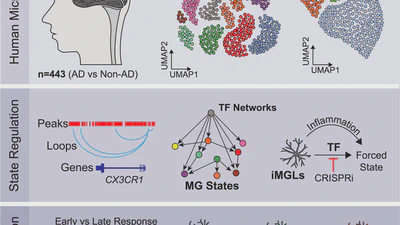
Here we report 194,000 single-nucleus microglial transcriptomes and epigenomes across 443 human subjects and diverse Alzheimer's disease pathological phenotypes.
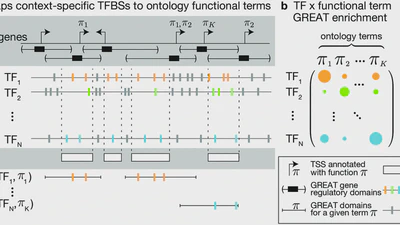
We develop an ontology-guided approach to ranking tissue-/cell-type-specific transcription factors (TFs) from chromatin accessibility data.
We propose SNPs2ChIP, a method to infer biological functions of non-coding variants through unsupervised statistical learning methods applied to publicly-available epigenetic …
