Admixed individuals offer unique opportunities for addressing limited transferability in polygenic scores (PGSs), given the substantial trans-ancestry genetic correlation in many complex traits. However, they are rarely considered in PGS training, given the challenges in representing ancestry-matched linkage-disequilibrium reference panels for admixed individuals.
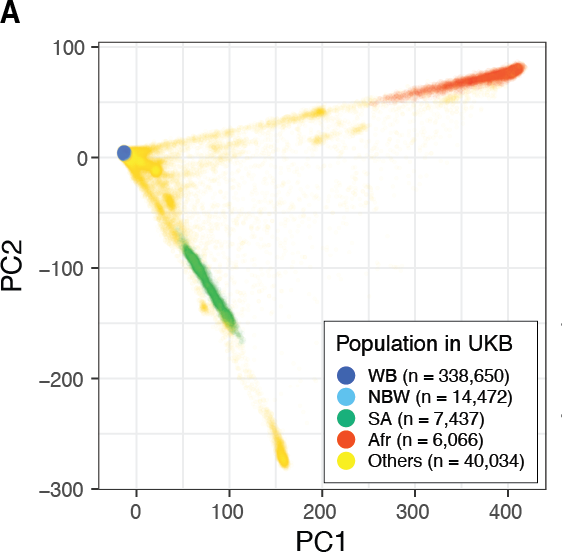
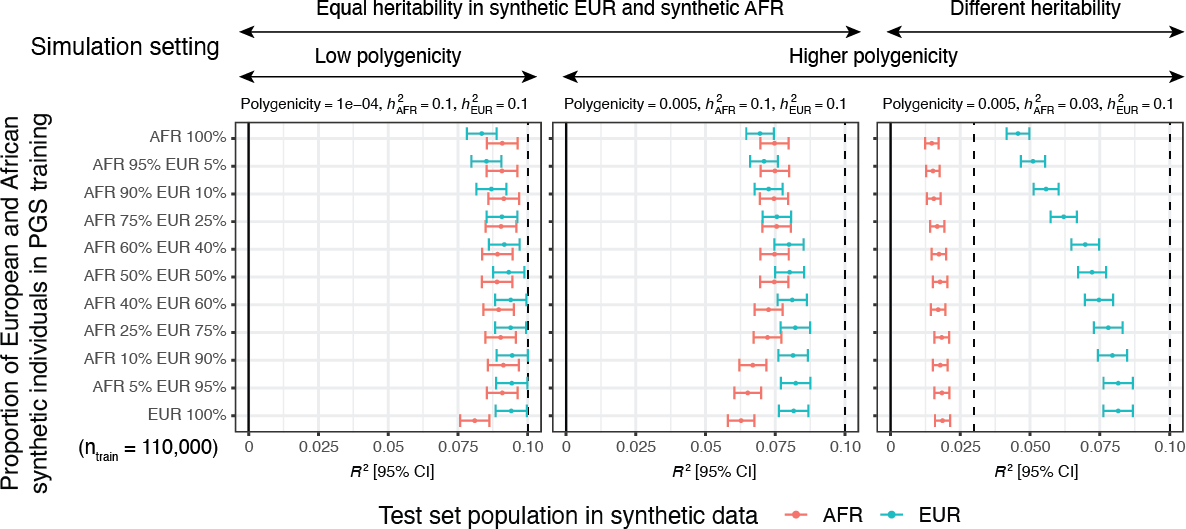
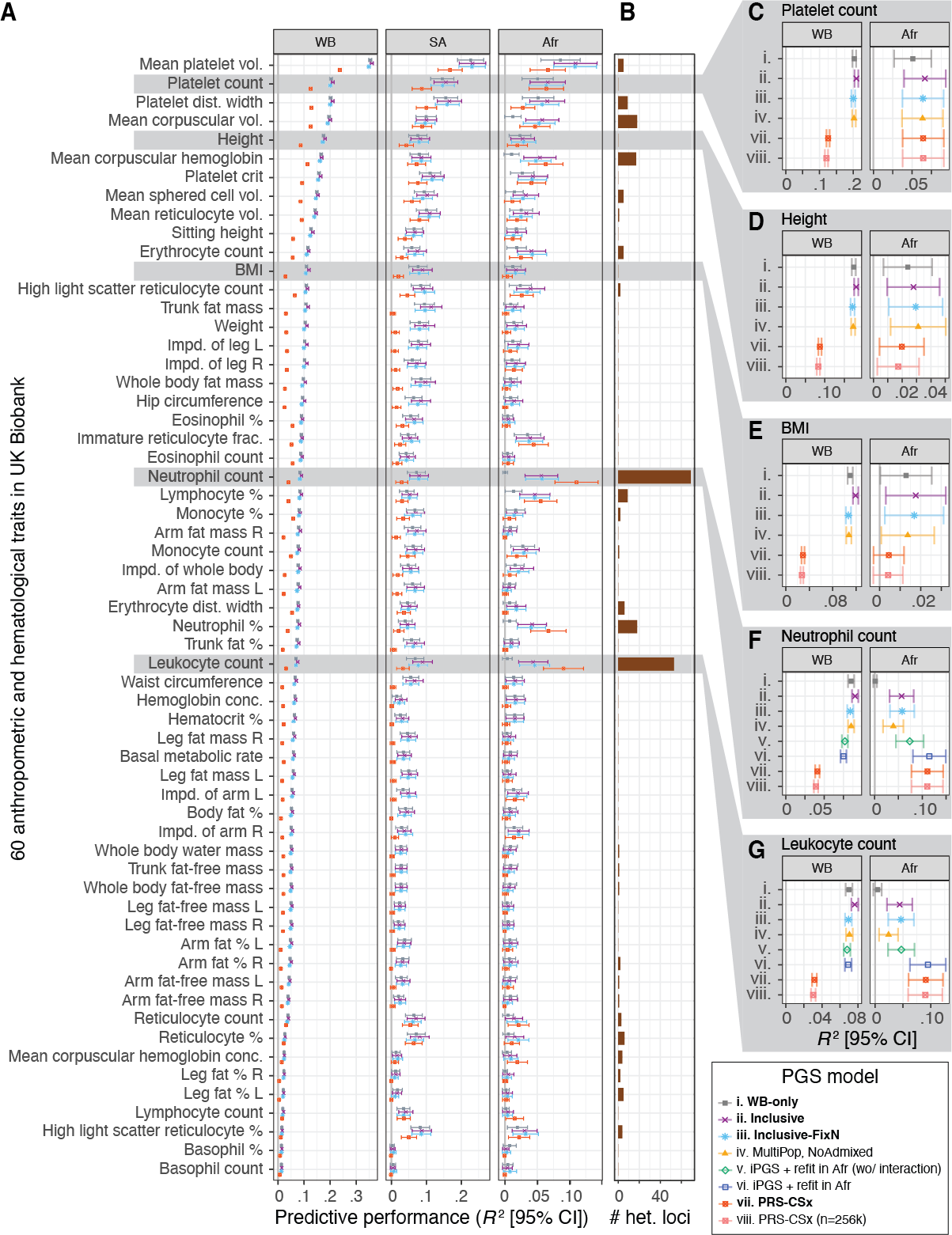
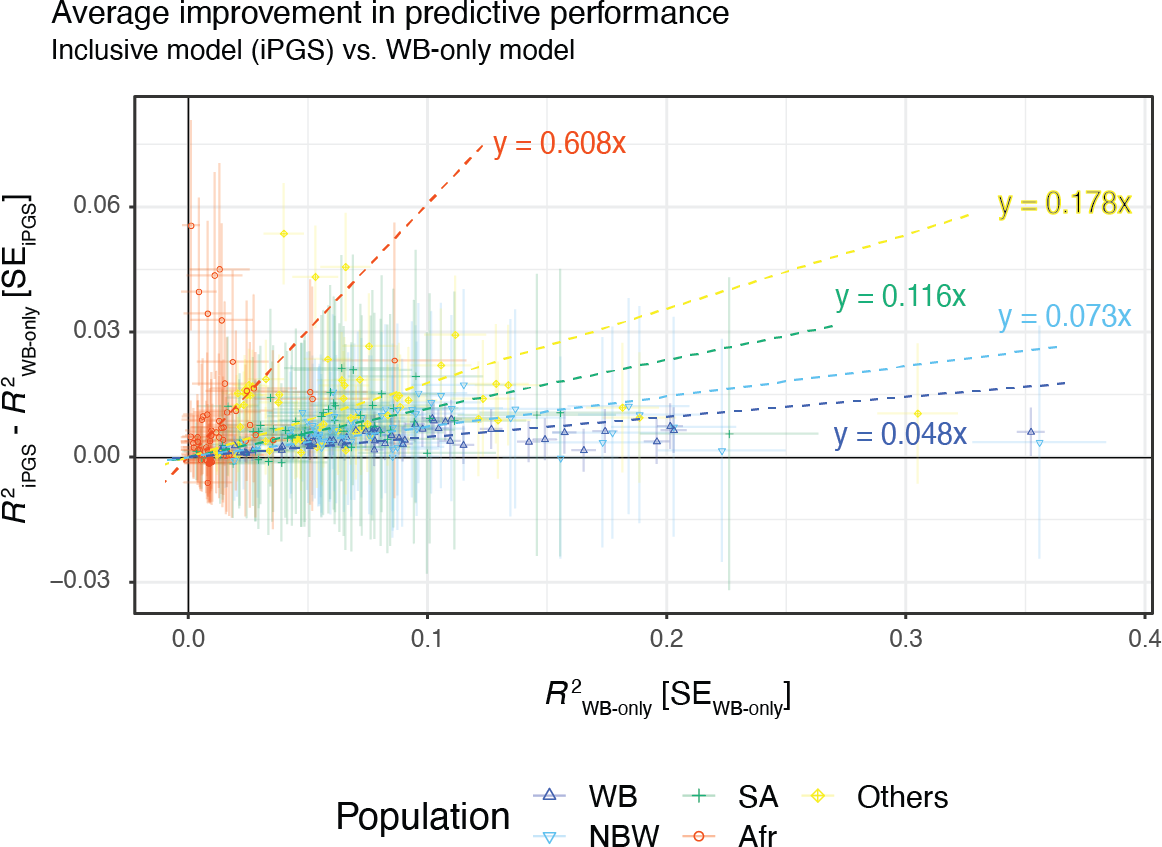
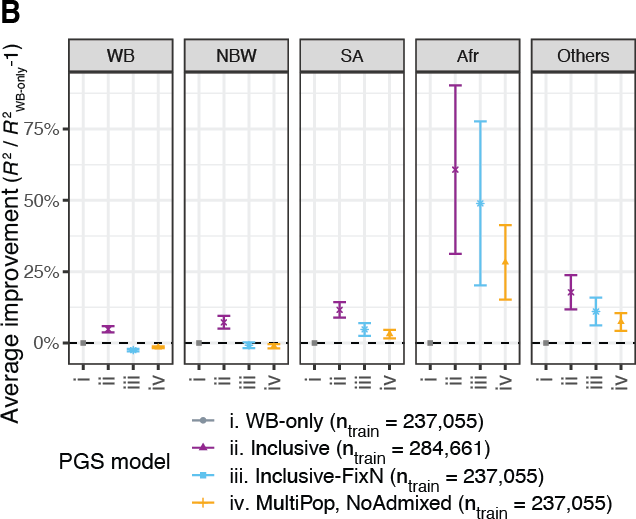
Admixed individuals offer unique opportunities for addressing limited transferability in polygenic scores (PGSs), given the substantial trans-ancestry genetic correlation in many complex traits. However, they are rarely considered in PGS training, given the challenges in representing ancestry-matched linkage-disequilibrium reference panels for admixed individuals. Here we present inclusive PGS (iPGS), which captures ancestry-shared genetic effects by finding the exact solution for penalized regression on individual-level data and is thus naturally applicable to admixed individuals. We validate our approach in a simulation study across 33 configurations with varying heritability, polygenicity, and ancestry composition in the training set. When iPGS is applied to n = 237,055 ancestry-diverse individuals in the UK Biobank, it shows the greatest improvements in Africans by 48.9% on average across 60 quantitative traits and up to 50-fold improvements for some traits (neutrophil count, R2 = 0.058) over the baseline model trained on the same number of European individuals. When we allowed iPGS to use n = 284,661 individuals, we observed an average improvement of 60.8% for African, 11.6% for South Asian, 7.3% for non-British White, 4.8% for White British, and 17.8% for the other individuals. We further developed iPGS+refit to jointly model the ancestry-shared and -dependent genetic effects when heterogeneous genetic associations were present. For neutrophil count, for example, iPGS+refit showed the highest predictive performance in the African group (R2 = 0.115), which exceeds the best predictive performance for the White British group (R2 = 0.090 in the iPGS model), even though only 1.49% of individuals used in the iPGS training are of African ancestry. Our results indicate the power of including diverse individuals for developing more equitable PGS models.
Published in The American Journal of Human Genetics, 2023
Polygenic score (PGS), a statistical approach to estimating genetic predisposition on traits, attracted substantial research interest. The current PGS models show limited transferability across populations, and there are a number of great new methods to address this challenge.
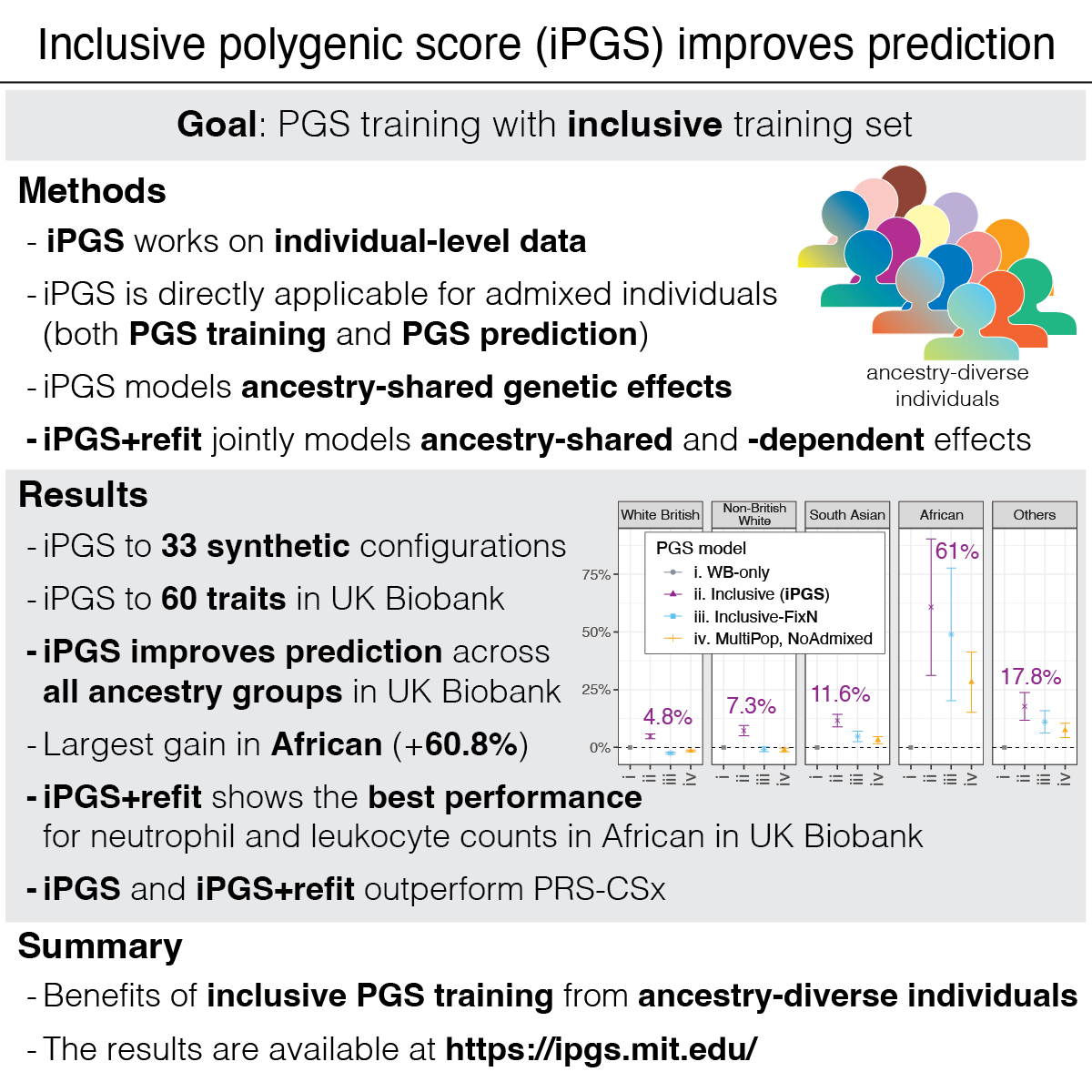
We propose inclusive polygenic score (iPGS), a PGS training strategy to capture ancestry-shared genetic effects by analyzing individuals across the continuum of genetic ancestry. We work directly on the individual-level data without relying on GWAS results and LD references.
We tested our approach across 33 simulation configurations and 60 quantitative traits in UK Biobank. We see increased power by including ancestry-diverse individuals compared to our baseline model trained only on white British individuals.
We observe improvements in performance for all population groups. The average improvement across the 60 traits was 60.8% for African, 11.6% for South Asian, 7.3% for non-British White, 4.8% for White British, and 17.8% for other diverse individuals.
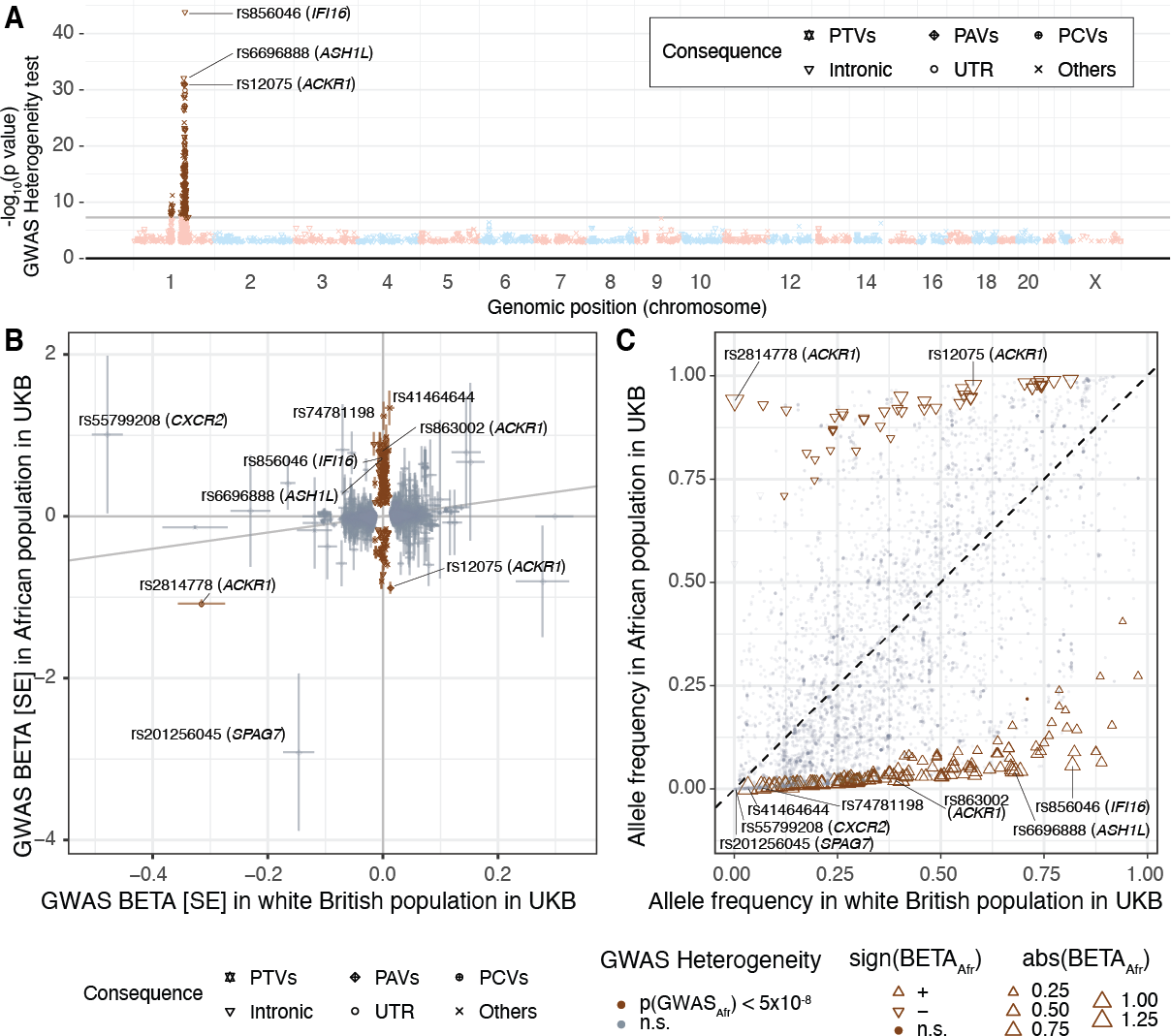
To consider ancestry-dependent genetic effects on top of ancestry-shared effects, we developed iPGS+refit. We used a heterogeneity test in GWAS meta-analysis and identified genetic variants with heterogeneous associations, such as the ACKR1 locus for neutrophil count.
Our iPGS+refit starts with one ancestry-shared component (iPGS) and adds ancestry-dependent effects using a relatively small number of genetic loci, facilitating better interpretation. We used hematological traits to show improved predictive performance.
We compared our model with PRS-CSx, a commonly-used multi-ancestry PGS method from summary statistics from multiple population groups and ancestry-matched reference panels. In our analysis, our iPGS/iPGS+refit models showed competitive or improved performance.
We thank UK Biobank, its participants, amazing collaborators and colleagues, as well as funding.
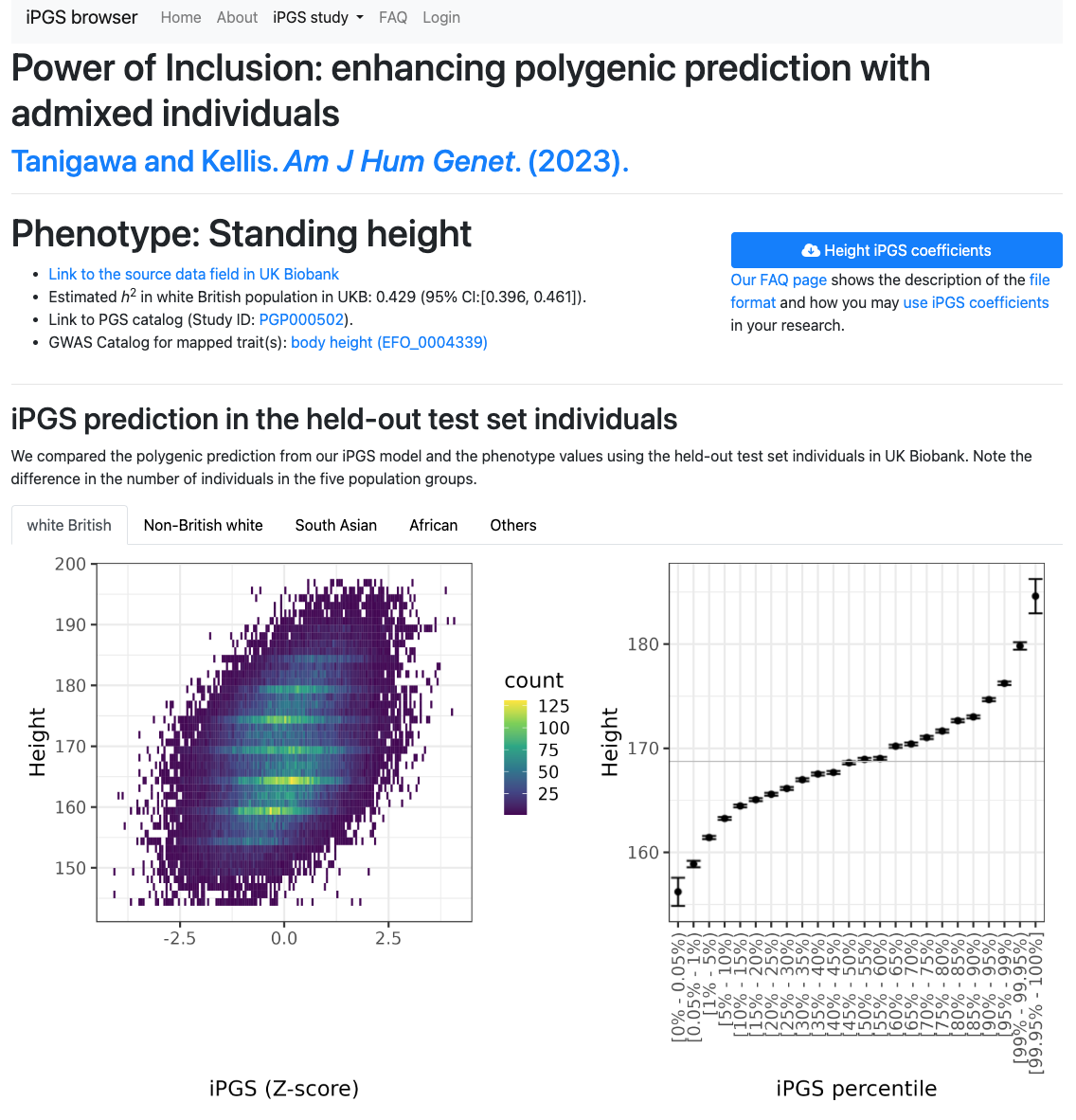
You can browse and download our iPGS models at our iPGS browser. Taking advantage of the sparsity of our PGS models, it offers direct integration with HaploReg and GREAT.

 Image credit: MIT