Yosuke Tanigawa, Ph.D.

Yosuke Tanigawa, Ph.D.

Assistant Professor

Mapping the biological basis of heterogeneity in disease.

Disease heterogeneity dissection Biomedical data science Statistical genetics Computational genomics Polygenic prediction Therapeutic target discovery

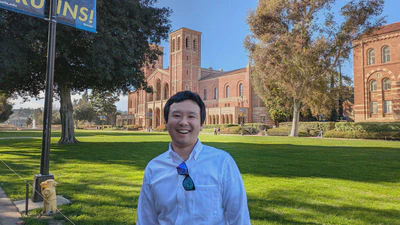
Yosuke Tanigawa is an Assistant Professor in the Department of Bioengineering at UCLA. He leads the Tanigawa Lab, which studies why individuals with the same diagnosis differ in disease onset, progression, and treatment response.

The lab develops statistical and computational methods for large-scale genetic, genomic, and phenotypic data. The work spans disease heterogeneity dissection, ancestry-aware polygenic prediction, and therapeutic target discovery from human genetics.

Before joining UCLA in July 2025, Yosuke trained at the MIT Computational Biology Lab with Manolis Kellis. He received his PhD in Biomedical Informatics at Stanford University, where he worked with Manuel Rivas and Gill Bejerano.

The lab values scientific rigor, open science, and clear communication. We aim to make complex human genetics accessible without losing scientific precision.
Posts and Publications

Hypometric genetics: Improved power in genetic discovery by incorporating quality control flags featured image

Hypometric genetics: Improved power in genetic discovery by incorporating quality control flags

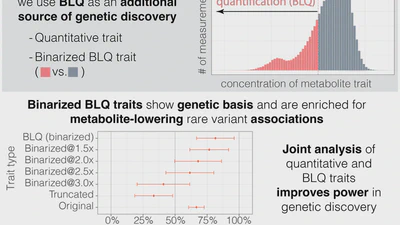
We introduce "hypometric genetics," an approach to investigate the genetic basis of binarized traits representing the presence of below-the-limit-of-quantification (BLQ) quality …

A polygenic score method boosted by non-additive models featured image

A polygenic score method boosted by non-additive models

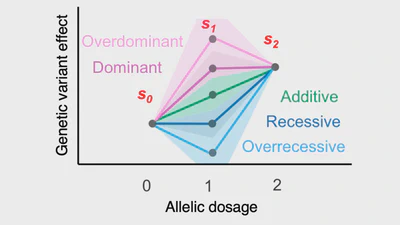
We developed GenoBoost, a polygenic score modeling approach, incorporating both additive and non-additive genetic dominance effects.

Yosuke Tanigawa, Ph.D.
Power of inclusion: Enhancing polygenic prediction with admixed individuals featured image

Power of inclusion: Enhancing polygenic prediction with admixed individuals

We developed a polygenic score training approach that allows direct inclusion of admixed individuals without the need for local ancestry inference and showed ancestry-diverse …

WhichTF is dominant in your open chromatin data? featured image

WhichTF is dominant in your open chromatin data?

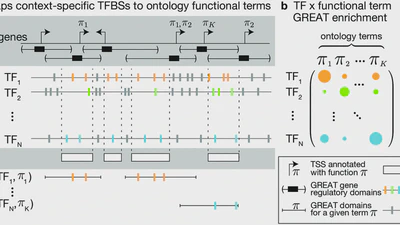
We develop an ontology-guided approach to ranking tissue-/cell-type-specific transcription factors (TFs) from chromatin accessibility data.

Yosuke Tanigawa, Ph.D.
Significant Sparse Polygenic Risk Scores across 813 traits in UK Biobank featured image

Significant Sparse Polygenic Risk Scores across 813 traits in UK Biobank

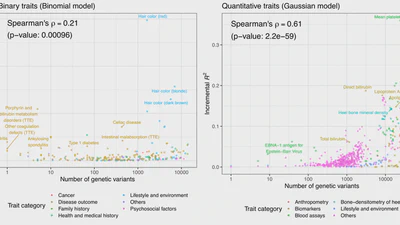
We performed a systematic assessment of the predictive performance of PRS models across >1,500 traits in UK Biobank and report 813 PRS models with significant predictive …

Genetics of 35 blood and urine biomarkers in the UK Biobank featured image

Genetics of 35 blood and urine biomarkers in the UK Biobank

We analyzed the genetic basis of 35 blood and urine biomarkers in UK Biobank. We revealed that genetic effects on biomarkers inform the genetic basis of disease.

Yosuke Tanigawa, Ph.D.
Rare protein-altering variants in ANGPTL7 lower intraocular pressure and protect against glaucoma featured image

Rare protein-altering variants in ANGPTL7 lower intraocular pressure and protect against glaucoma

We identified an allelic series of rare protein-altering variants in ANGPTL7 that lower intraocular pressure and protect against glaucoma, highlighting ANGPTL7 as a therapeutic …

Components of genetic associations across 2,138 phenotypes in the UK Biobank highlight adipocyte biology featured image

Components of genetic associations across 2,138 phenotypes in the UK Biobank highlight adipocyte biology

We developed DeGAs to decompose shared genetic associations across 2,138 UK Biobank phenotypes and identify their underlying pleiotropic structure.